Secrets of the Brain
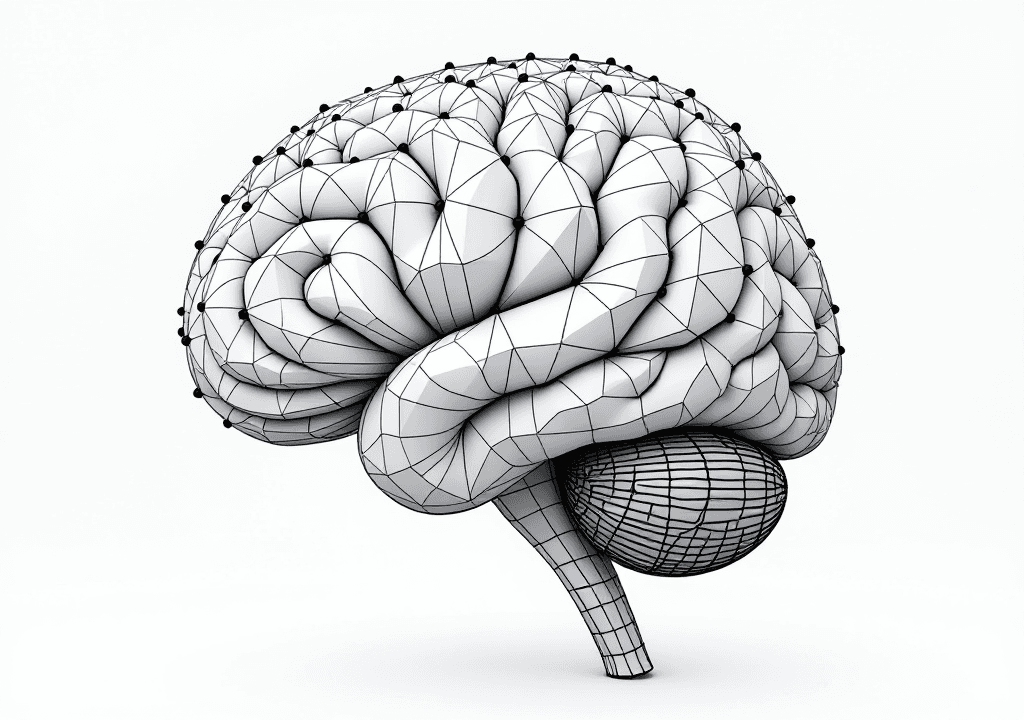
Neuroscientists are making stunning advances in understanding the workings of the human brain. Van Wedeen, among them, is creating in unprecedented detail representations of the brain’s wiring: the network of some 100,000 miles of nerve fibers, called white matter, that connects the various components of the mind, giving rise to everything we think, feel, and perceive.
Wedeen focuses in on particular pathways, showing some of the circuitry important to language and other kinds of thought. Then he pares away most of the pathways in the brain to see how they’re organized. As he increases the magnification, something astonishing takes shape. In spite of the dizzying complexity of the circuits, they all intersect at right angles, like the lines on a sheet of graph paper.
“It’s all grids,” says Wedeen.
When Van Wedeen first unveiled the grid structure of the brain, in 2012, some scientists were skeptical, wondering if he’d uncovered only part of a much more tangled anatomy. But Wedeen is more convinced than ever that the pattern is meaningful. Wherever he looks—in the brains of humans, monkeys, rats—he finds the grid.
He notes that the earliest nervous systems in Cambrian worms were simple grids—just a pair of nerve cords running from head to tail, with runglike links between them. In our own lineage the nerves at the head end exploded into billions but still retained that gridlike structure. It’s possible that our thoughts run like streetcars along these white matter tracks as signals travel from one region of the brain to another.