concepts
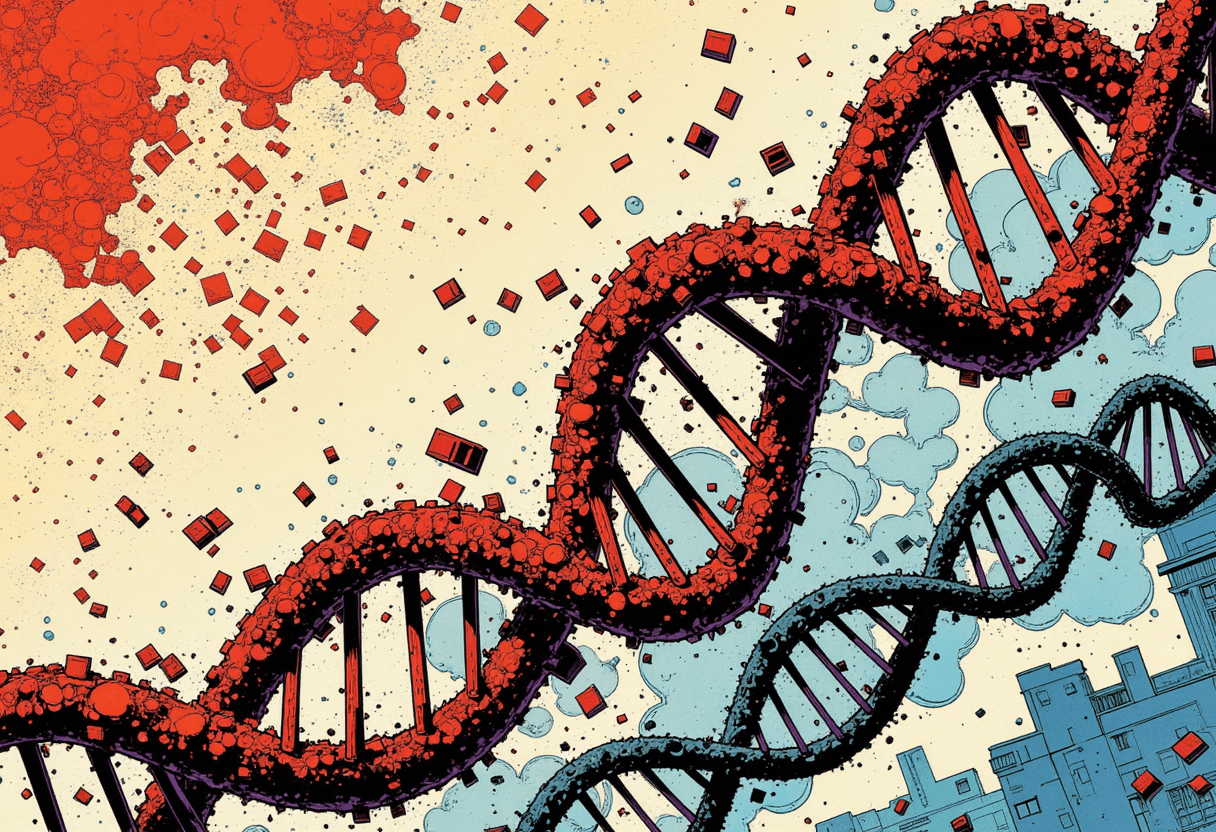
Digesting the concept of the Grid
The creativity of nature does not end with us humans at a pinnacle but only continues through us, in a continuing creation now driven in part by the creativity of men—it is what the Grid tells us.
It says these four temporal divisions of human knowledge—the present, past, future, and possible—are the starting point of language. But here in the deep structure they signify not four distinct regions in some continuous time space but are merely markers for the four different sources of information feeding into our consciousness—the qθ of our senses, memory, motors, brain.
Whether it is the tenses of our verbs, or the time-aspects of our sentences, what we tag as ‘present’ in our grammars is merely information from the senses, what is past is from memory, what is future is from the motor operations of will, and what is possible is from the attentive processes of a mindful brain.
—o—o—o—o—
This inner vision is our species’ most evolved sense, an inner vision of things going on inside of us, in synchrony with our organs’ outer vision of things. There is a suspicion in neurophysiology that what may serve as retina of this inner eye is our neocortex. From the neocortex, presumably, the sensory data is processed by the same memory centers as do it for our eyes and other outer organs.
Linking up these inner world and outer worlds of things is the primary work of learning. The answer to the age-old question of whether language is nature or nurture is found to be ‘both.’ It is all learned and nurtured. Paul McCartney (1967) captured something of the difference in a song:
—o—o—o—o—
An organism like us is an information system, a living, breathing intercourse of synchronized data. In our human case we are the synchronized data of an estimated maybe 200 thousand billion cells working together as a unit thing. How it all works is not well known but it is what our computers are poorly mimicking. There is much in the grid to suggest that the entire universe is a continuum of the same information system throughout.
Our conscious thoughts, waking and dreaming, are our organism’s direct access to this information system. The different languages that we speak are our different translations of it into the words that we speak to one another as a continuing part of that information system.
What exactly is the Grid; the power of four
How this business of language works, the Grid tells us, is that we break down the information in our consciousness into separate thoughts, each thought built around a single verbal event, what turns into the verb part of our sentences. It is the verbs in our consciousness therefore that mark and separate our thoughts, one from each other.
It is small wonder that our computers take 16 bits of 0’s and 1’s to complete a unit of information in the way of hexadecimals. And partly for this reason perhaps we have been unable to teach computers to speak. For, as the Tagalog Grid teaches us, we must think in quaternary fours instead of binary twos, in quadrisections instead of bisections. q1 and q2 and the grid it generates evidence it.
—o—o—o—o—
the grid shows how our own nervous system does it—by quadrisections within quadrisections, we are told, is the way information works deep down. All the accumulated evidence of the tagalog-english Grid points to the nervous system of our human organism as the immediate origin of the language out of our mouths.
The storyline that makes the most sense to me thus far traces the origins of this language of the nervous system to the very cells that make up the system. Cells are the smallest units of life as we know it and, best as i can figure, we must go back at least four quadrisections from qθ to map out how we languaged humans must have come about from these cells.
—o—o—o—o—
The link to our DNA
if the Grid teaches us anything at all, it is that things come in fours. 48 bisections make for exactly 24 quadrisections and that makes better sense for the grid.
the origins of language, 2024